
Patient Transport Solutions
Services We Provide

Multi-Mode Transit Support
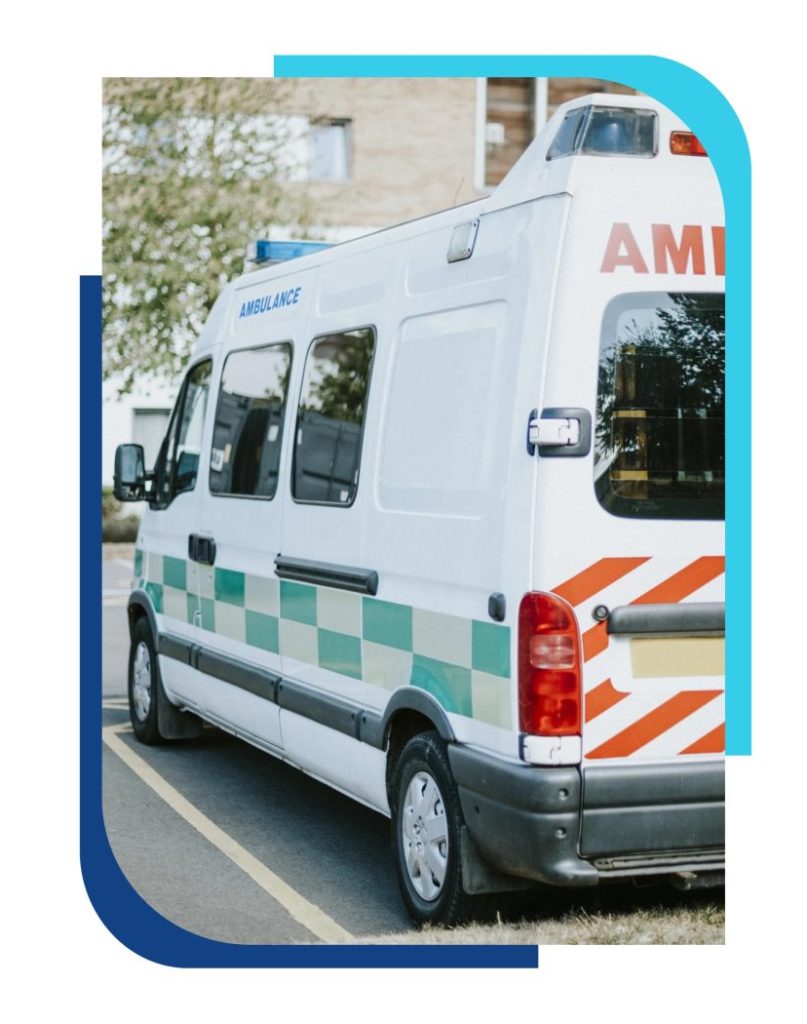
Our technology adapts to all transport modes, including ground ambulances, marine vessels, and air transport.

Device Integration
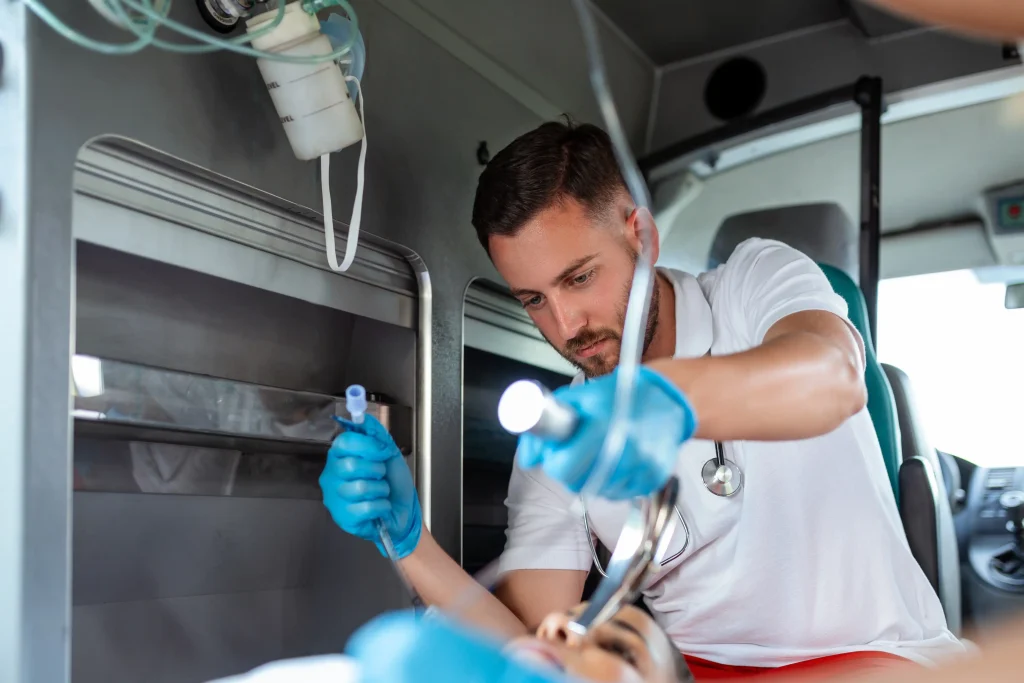
The system supports critical devices such as ventilators, syringe pumps, and HL7-compliant medical monitors.

Uninterrupted Connectivity
Network stack including GSM, GPRS, VoLTE, and Satellite ensures continuous data flow.

Encrypted Data Transmission
Patient vital data is securely transmitted via SSL VPN protocols, ensuring complete privacy and protection.

Digital Record Setup
Our command center creates digital medical records during transit so hospitals are fully prepared on arrival.
What You Will Experience ?
Our transport solution is more than a tracking tool, it is a clinical extension of the hospital.
01.
Specialist Intervention at Pickup
As soon as a patient is registered, our command center team begins active monitoring of vitals.
02.
Guided Stabilization
Our remote clinicians provide real-time advice and protocols to medical staff in the ambulance to help stabilize the patient during the journey.
03.
Geographical Traceability
Every vehicle synchronizes with GPS, allowing both the command center and the destination hospital to track the exact location
04.
End-to-End Reliability
Our solutions have been rigorously tested for extended durations of 3 hours and above to ensure stability during long-distance transfers.
Frequently Asked Questions
What if the ambulance goes through a remote area with no signal?
We’ve solved for “dead zones” by using a multi-network stack including GSM, 4G, and secure Satellite communication to ensure data flow never stops.
Does this work for air or sea transport too?
Yes, our technology is built for surface, marine, and air modes of patient transportation.
What equipment can you monitor during the trip?
We support ventilators, syringe pumps, and HL7-compliant monitors, providing a mobile ICU environment.
Does the destination hospital get a “heads up”?
Yes. We provide full medical records and real-time vitals reports to the receiving hospital before the patient even arrives.
Is this service only for emergencies?
While vital for emergencies, it is also used for any high-risk patient transfer where continuous specialist monitoring is required.